ICAR 2026 Obihiro Presymposium Program 日本語版 →
Payment of the registration fee must be made via the following link:
Cattle Presymposium
https://buy.stripe.com/7sY8wQaZx02927o30o67S04
※ Registration for either one is sufficient to attend both presymposia.
There is no need to register for both. Please be careful not to register twice by mistake.
※On-site registration will not be available under any circumstances.
The registration deadline is 12.June,2026, Friday
Please be sure to complete your payment in advance.
Please note that registrations cannot be accepted after the deadline.
-Cattle Presymposium:
"Beef on Dairy" - Impact of Research and Technological Advances in Animal Reproduction on the Cattle Industry
Time and Date: 13:00-16:45 (22 June, 2026, Monday)
Venue: Obihiro Civic Cultural Hall (Small Hall) Obihiro, Hokkaido, Japan
Language: English (Subtitling in Japanese using an app. The function of software is being considered.)
Chair Takeshi Osawa (University of Miyazaki, Japan) and Satoko Matoba (National Livestock Breeding Center, Japan)
Opening Remarks
In recent years, the term ‘Beef on Dairy’ has become increasingly familiar. Since the late 2010s, the widespread use of sex-sorted semen in cattle reproduction has reduced the supply of male Holstein calves. This development has reshaped the beef market, particularly in the United States, where the number of crossbred calves born from dairy cows inseminated with beef breed semen has risen sharply. At the same time, a shortage of Holstein heifers has driven their prices upward. Meanwhile, global demand for Wagyu beef continues to grow. In Japan, the transfer of Japanese Black embryos into Holstein cows has become common practice, and Wagyu beef exports have expanded. Nevertheless, the future remains uncertain, influenced by fluctuations in calf prices and other market factors.
Given this situation, it is both timely and important to consider the future course of the cattle industry and the role that emerging reproductive technologies may play. Equally, it is essential to provide opportunities for younger generations—those who will shape the future of the field—to share their perspectives, aspirations, and visions.
This symposium seeks to bring together veterinarians, researchers, engineers, and other professionals involved in bovine reproduction, both from Japan and abroad. We aim to provide up-to-date information on technological advances and research findings, foster constructive exchange among participants, and strengthen networks that connect academia, industry, and production. In this sense, the symposium is intended not only as an academic forum, but also as a platform for dialogue with stakeholders and a way of conveying messages to the next generation.
The program will include: an overview of beef and dairy production with a global outlook on the cattle industry; recent research trends in assisted reproductive technologies; and the current status and future prospects of genetic improvement in Japanese Black cattle.
We warmly welcome not only professionals already active in this area, but also students, young researchers, and anyone curious about the topic. By sharing ideas and insights, we hope to open new paths for the future of the cattle industry through research and innovation in reproduction. We look forward to your active involvement.
Takeshi Osawa, DVM, MPhil, PhD
Professor, Laboratory of Theriogenology, University of Miyazaki
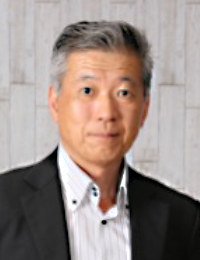
Takeshi Osawa
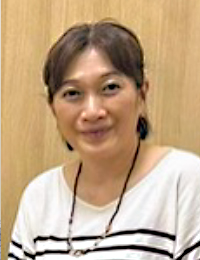
Satoko Matoba
Titles and speakers:
Opening address (Takeshi Osawa, Akio Miyamoto)
Chair Takeshi Osawa and Satoko Matoba
1. Growing ‘Beef-on Dairy’ technology and market in the world-challenges and prospects
Alan Kelly (University College Dublin, Ireland)
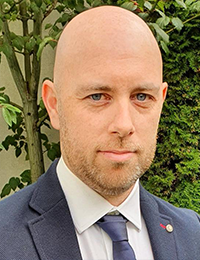
Prof. Alan Kelly is Associate Professor in Animal Science at University College Dublin, based in the School of Agriculture and Food Science, where he also serves as Director of the Animal and Crop Science programme. He lectures and coordinates modules in advanced beef production, sustainable livestock production systems, dairy calf rearing and development, and ruminant nutrition.
His research focuses on developing innovative and practical blueprints for sustainable, pasture-based beef production systems. A central theme of his work is the improvement of economically important traits―including growth efficiency, feed conversion, fertility, early-life performance, and ruminal methanogenesis―through targeted nutritional strategies and the investigation of underlying physiological and molecular mechanisms. His research is strongly industry-relevant, with a focus on enhancing productivity, profitability, and environmental sustainability in livestock systems.
2. Embryo transfer and assisted reproductive technology: present and future
Patrick Lonergan (University College Dublin, Ireland)

Pat Lonergan is Professor of Animal Reproduction in the School of Agriculture and Food Science at University College Dublin. His research focuses on understanding the regulation of embryo development in vivo and in vitro, embryo maternal communication and the establishment of pregnancy in cattle as well as aspects of bull fertility including the contribution of the sire to embryo mortality and overall herd fertility. He is a long-time member and Past President of the International Embryo Technology Society (IETS), served on the board of Association of Embryo Transfer in Europe (AETE) and has served on the Editorial Boards of the journals Biology of Reproduction and Reproduction Fertility and Development. Together with his students and collaborators, he has published over 300 peer-reviewed papers (h-index = 106). He was awarded a DSc degree on Published Work and elected Member of the Royal Irish Academy, the highest academic honour in Ireland. He has supervised >35 PhD and >20 Research Masters students to completion.
Break (30 min)
3. Towards a future where breeding cows are no longer needed
Kenichiro Sakaguchi (Gifu University, Japan)
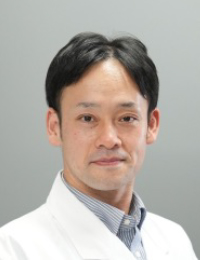
Kenichiro Sakaguchi, DVM, PhD, is currently an Associate Professor at the Joint Department of Veterinary Medicine, Faculty of Applied Biological Sciences & Center for One Medicine Innovative Translational Research, Institute for Advanced Study, Gifu University. His research covers bovine follicular development and assisted reproductive technologies especially in vivo and in vitro embryo production, and in vitro growth culture of immature oocytes.
4. ‘Japanese Black cattle, “Wagyu” -on-dairy’- Current situation and outlook
Miki Sakatani (NARO, Japan)
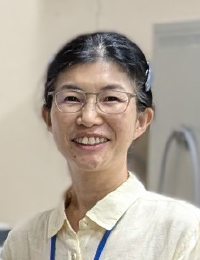
Miki Sakatani DVM PhD, is a group leader in Livestock Reproduction Group, Institute of Livestock and Grassland Science, National Agriculture and Food Research Organization, Japan. Her research interest is the effect of heat stress on bovine reproduction, particular focus on the early embryo development.
Panel discussion
Closing address
Payment of the registration fee must be made via the following link:
Horse Presymposium
https://buy.stripe.com/eVqeVe3x5bKR6nE58w67S05
※ Registration for either one is sufficient to attend both presymposia.
There is no need to register for both. Please be careful not to register twice by mistake.
※On-site registration will not be available under any circumstances.
The registration deadline is 12.June,2026, Friday
Please be sure to complete your payment in advance.
Please note that registrations cannot be accepted after the deadline.
-Horse Presymposium:
Equine Reproduction for Practitioner
Time and Date: 13:00-17:05 (22 June, 2026, Monday)
Venue: Obihiro Civic Cultural Hall (Large Hall) Obihiro, Hokkaido, Japan
Language: English (Subtitling in Japanese using an app. The function of software is being considered.)
Chair Yasuo Nambo (Obihiro University of Agr. & Vet Med, Japan) and Tom Stout (Gluck Equine Research Center, USA)
Opening Remarks
Distinguished colleagues, ladies and gentlemen,
Welcome to the 20th International Congress on Animal Reproduction (ICAR) and thank you very much for joining this pre-symposium. My name is Yasuo Nambo, and I have the honor of serving as the organizer of this event.
It is a great privilege and a genuine pleasure to welcome you here in Obihiro for this memorable occasion.
I would like to express my sincere gratitude to all the researchers, specialists, equine industry professionals, and veterinarians who have traveled from around the world to participate in this meeting.
This year marks the 20th edition of ICAR, and, notably, it is being held in Asia for the first time. We regard this as a recognition of the remarkable progress in animal reproduction research within the Asian region and of its growing contribution to the international scientific community.
To commemorate this special occasion, we have organized this pre-symposium entitled “Equine Reproduction for Practitioner.” The symposium features technical lectures delivered by internationally renowned experts in equine reproduction. I am confident that this program will provide an excellent opportunity to learn about the latest advances, knowledge, and technologies in the field.
I also sincerely hope that this symposium will serve as a platform where knowledge and experience from East and West can come together, fostering new perspectives and innovative ideas. Furthermore, I hope that through this meeting, participants will establish international networks that will lead to future technological advances and collaborative research in equine reproduction.
On behalf of the organizing committee, I would like to express my heartfelt appreciation to all those whose support and cooperation have made this event possible. In particular, I would like to extend our sincere thanks to the Japan Racing Association for its generous sponsorship and direct support of this symposium.
I would also like to express my deepest gratitude to Prof. Akio Miyamoto. Without his tireless efforts and dedication, this symposium could not have been realized.
And above all, I would like to thank each and every one of you for being here today. Your research, expertise, and passion are what make this meeting truly meaningful and inspiring.
I wish you all a productive and enjoyable symposium, and I hope your time in Obihiro will be both rewarding and memorable.
Thank you very much.
Yasuo Nambo, DVM, PhD.Professor in Global Agro-medicine Research Center, Obihiro University of Agriculture & Veterinary Medicine
Yasuo Nambo
Titles and speakers:
Opening address (Yasuo Nambo)
Chair Yasuo Nambo (Obihiro University of Agr. & Vet Med, Japan) and Tom Stout (Gluck Equine Research Center, USA)
1. Prospect of Horse breeding and reproductive treatment in Japan
Yasuo Nambo(Obihiro University of Agriculture and Veterinary Medicine, Japan)
Yasuo Nambo (DVM 1993, PhD 1999) worked as a veterinarian at Japan Racing Association (JRA); (1993-2014) and became a Professor of Equine Reproductive Obihiro University of Agriculture and Veterinary Medicine, Japan. His research interest is focused on equine reproductive diagnosis by endocrinological and imaging technology.
2. Ovarian disorder in mares
Patrick McCue (Colorado State University, USA)
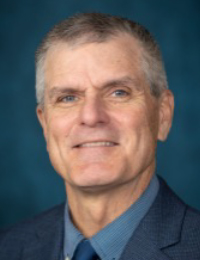
Patrick McCue, DVM, PhD, Diplomate ACT is a Professor in the Department of Clinical Sciences in the College of Veterinary Medicine and Biomedical Sciences at Colorado State University in Fort Collins, Colorado, USA. His primary clinical and research interests are in the problem mare, equine reproductive endocrinology and equine embryo transfer.
Break (30 min)
3. Diagnostics and therapeutic strategies for equine endometritis
Mats Troedsson (University of Kentucky, USA)
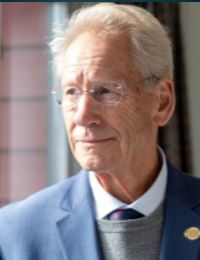
Mats H.T. Troedsson, DVM, PhD, Dipl. ACT, Dipl. ECAR is a Professor of Equine Reproduction at Maxwell H. Gluck Equine Research Center, University of Kentucky, USA. His research centers on reproductive immunology in horses, with a particular focus on uterine inflammation.
4. Twin reduction in advanced pregnancy and Strategies to reduce early embryonic loss
Tom Stout (Gluck Equine Research Center, USA)
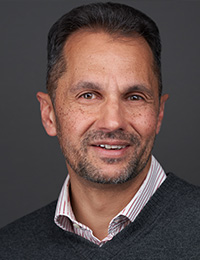
5. The Development of Thoroughbred Breeding and the Future of Retired Racehorses in Japan
Kenji Korosue (Japan Racing Association, Japan)
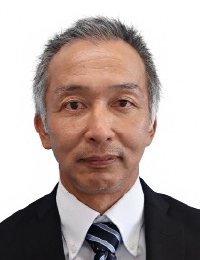
Kenji Korosue joined Japan Racing Association (JRA) as a veterinarian in 1995. After working for ten years as a clinical veterinarian at a JRA training center, he engaged in the breeding and rearing training of racehorses at a JRA-owned rearing farm.
In 2025, he was appointed Director of the Horse Affairs Promotion Office within the Horse Affairs Department. Since 2023, he has also served as a member of the Horse Welfare Committee of the International Federation of Horseracing Authorities (IFHA).