Program with Speaker Photos and Brief Biographies
Program at a Glance ▲
23-June (Tue) Day-2
Plenary session: 10:00 – 12:00 (Obihiro Civic Culture Hall)
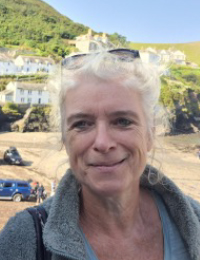
Ann Van Soom, DVM, PhD, Dipl ECAR is a Full Professor in the Department of Internal Medicine, Reproduction and Population Health, Ghent University, Belgium Her research focuses on in vitro fertilization and embryo development in domestic mammals. An ancillary line of her research is dedicated to reproductive biology in wildlife and domestic dogs and cats, with a particular emphasis on sperm quality assessment and the characterization of the genital microbiome.
•Thomas Hildebrandt (Leibniz Institute for Zoo and Wildlife Research, Germany)
“De-extinction of the northern white rhinoceros (Ceratotherium simum cottoni)”
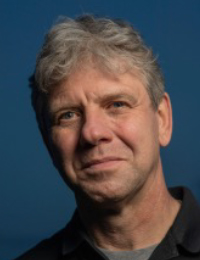
Prof. Dr. Thomas Bernd Hildebrandt, HonFRCVS, HonMSRF, Dip ECZM; Chair, Wildlife Reproduction Medicine, Freie Universitaet Berlin, Germany; Head, Dept. Reproduction Management
Leibniz Institute for Zoo & Wildlife Research; Honorary Professorial Fellow Life Sciences, Melbourne University, Australia; Adjunct Professor School of Veterinary Medicine and Biomedical Sciences, IPB University,Bogor, Indonesia
Main research topics are: Assisted reproduction in critically endangered species, Aging research and Neurofunction in elephants
•Andrew Pask (The University of Melbourne, Australia)
“De-extinction: how reviving the past is revolutionizing the future of conservation biology”
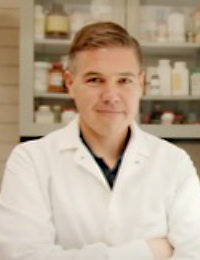
Andrew Pask, PhD, is a Professor of Genetics at the University of Melbourne and Chief Biology Officer at Colossal Biosciences. His research focuses on marsupial reproductive biology, evolutionary genetics, and the development of advanced biotechnologies for species restoration, including the de-extinction of the thylacine and genetic rescue of endangered wildlife.
•Teruhiko Wakayama (University of Yamanashi, Japan)
“The challenges and prospects of mammalian reproduction in extraterrestrial environments”
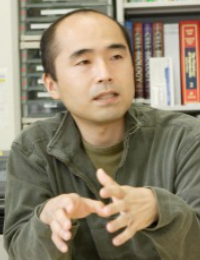
Teruhiko Wakayama is a professor and director in the Advanced Biotechnology Center, University of Yamanashi, Japan.
His research focuses on the permanent preservation of genetic resources using cloning and freeze-drying cells, as well as the possibility of space reproduction in mammals.
“Tasting Hokkaido foods, wine and beer !” (Tokachi Plaza Garden) 18:30 – 21:00
24-June (Wed) Day-3
Plenary session: 8:30 – 10:30 (Obihiro Civic Culture Hall)
•Katsuhiko Hayashi (Osaka University, Japan)
“Reconstitution of germ cell and gonadal development for in vitro gamete production”
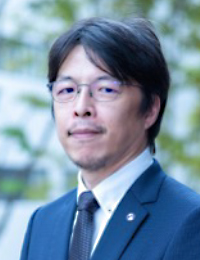
Dr. Katsuhiko Hayashi is a full professor in Department of Genome Biology, Graduate School of Medicine, Osaka University. Dr. Hayashi has dedicated his career to studying germ cell development and its reconstitution in vitro through my career: 1994-1996, MS course of Meiji University; 1996-2002, an assistant professor in Tokyo University of Science; 2002-2005, a staff researcher in Osaka Medical Center (Ph.D. 2004); 2005-2009, post-doctoral fellow in the Gurdon Institute, University of Cambridge; 2009-2014, associate professor in Kyoto University; and 2014-2021 a full professor in Kyushu University. From 2021, Dr. Hayashi has been in the current position in Osaka University. The research aim of the Hayashi’s group is to understand genetic and epigenetic regulation of mammalian oocyte differentiation using a unique culture system that produces oocytes from pluripotent stem cells.
•Brietta Latham (Washington State University, USA)
“Direct germline gene editing for precision trait development in livestock”
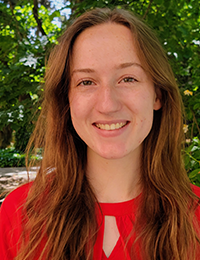
Brietta Latham, PhD is a Postdoctoral Researcher in the College of Veterinary Medicine at Washington State University. Working in the lab of Dr. Jon Oatley, her research focuses on the application of gene editing to livestock for the development of more efficient and resilient food animal production.
•Zongliang (Carl) Jiang (University of Florida, USA)
“Blastoids for modeling early embryonic development: Application to domestic livestock”
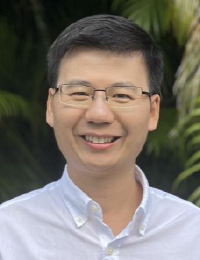
Dr. Zongliang (Carl) Jiang, PhD, is an Associate Professor in the Department of Animal Sciences at the University of Florida. His research centers on epigenetic regulation of early embryonic development and placental trophoblast differentiation. His group has also established multiple bovine embryo-derived stem cells and stem cell-derived embryo models, termed blastoids, and is currently working to use these technologies to develop novel ARTs for cattle reproduction.
Free for the afternoon (Excursions & Activities)
25-June (Thu) Day-4
Plenary session: 8:30 – 10:30 (Obihiro Civic Culture Hall)
•Pascale Chavatte Palmer (French National Institute for Agriculture, Food, and Environment, France)
“Placental adaptation to maternal environment in domestic animals”
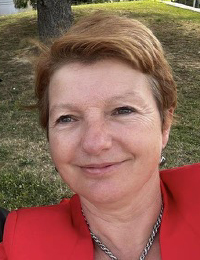
Pascale Chavatte-Palmer, DVM, PhD, is the director of the Biology of Reproduction, Environment, Epigenetics and Development research division at the National Research Institute for Agriculture, Food and Environment (INRAEZ) in Jouy en Josas, France. Her research centers on fetal programming in domestic animals with a particular interest in the role of the placenta.
•Jessica Townsend Graybeal (California State University, USA)
“Intergenerational and transgenerational epigenetic mechanisms shaping livestock production and reproduction”
Dr. Jessica Townsend Graybeal is an Assistant Professor of Dairy Science at California State University, Fresno. Her research focuses on the role of nutrition in shaping epigenetic regulation and its effects on production, reproduction, and health traits in livestock. Her current work aims to betterunderstand how early-life nutritional interventions can improve long-term performance and health in dairy systems, with a particular interest in calf nutrition.
•Marc-André Sirard (Université Laval, Canada)
“Epigenetics: a new source of information for selection and management of cattle herds”
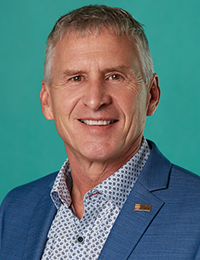
Dr Sirard has graduated from Veterinary Medicine in 1981 at University of Montreal. He went to large animal practice before completing his PhD at Laval University in 1986 and spent all his professional life working in IVF. He used a laparoscopic approach to perform IVF in cattle and obtained the first test-tubes calves in 1985 using a clinically usable approach. During his post-doc in USA, Dr Sirard co-developed a method to produce bovine embryos by the hundreds using oocytes recovered from post-mortem cows. He came back to Québec in 1987 and obtained an industrial chair to work on bovine oocytes and sperm in 1990. He founded the Centre de Recherche en Biologie de la Reproduction in 1995 which has grown to include more than 100 people today. He obtained a senior Canadian Research Chair in 2000 on genomics applied to reproduction and has created an international effort to define the normal genomic program in early mammalian embryos which has become an NSERC strategic network, EmbryoGENE in 2008. He has published over 325 scientific papers and has been invited to give over 100 invited lectures in international meetings. His work has demonstrated the value of controlled FSH stimulation to obtain developmentally competent oocytes in cattle. His current research activities are focus on the epigenetic mechanism allowing information transfer from one generation to the next.
Gala Dinner (Hokkaido Hotel) 19:00 – 21:30
26-June (Fri) Day-5
Plenary session: 8:30 – 10:30(Obihiro Civic Culture Hall)
Pat Lonergan is Professor of Animal Reproduction in the School of Agriculture and Food Science at University College Dublin. His research focuses on understanding the regulation of embryo development in vivo and in vitro, embryo maternal communication and the establishment of pregnancy in cattle as well as aspects of bull fertility including the contribution of the sire to embryo mortality and overall herd fertility. He is a long-time member and Past President of the International Embryo Technology Society (IETS), served on the board of Association of Embryo Transfer in Europe (AETE) and has served on the Editorial Boards of the journals Biology of Reproduction and Reproduction Fertility and Development. Together with his students and collaborators, he has published over 300 peer-reviewed papers (h-index = 106). He was awarded a DSc degree on Published Work and elected Member of the Royal Irish Academy, the highest academic honour in Ireland. He has supervised >35 PhD and >20 Research Masters students to completion.
•Stephen Butler (Agriculture and Food Development Authority, Ireland)
“‘Beef-on-dairy’: harnessing assisted reproductive technologies to improve performance and sustainability in seasonal-calving systems”
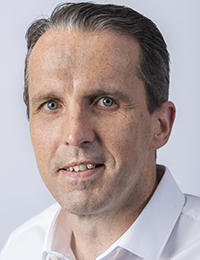
Dr. Stephen Butler is a Principal Research Scientist and group leader for dairy cattle reproduction research in Teagasc Moorepark, located in Co. Cork. His main areas of research include exploring the genetic basis of sub-fertility, oestrus and ovulation synchronization protocols for seasonal calving systems, the effects of micronutrients on dairy cow reproductive physiology, strategies to utilize sex-sorted semen in dairy herds, and the use of assisted reproductive technologies to accelerate genetic gain in elite genetic merit dairy and beef breeds. He has served as physiology section editor for Livestock Science and Journal of Dairy Science. He has presented invited plenary session talks at national and international conferences to animal scientists, veterinarians, policy makers and dairy herd-owners. He has published over 100 peer-reviewed scientific publications.
•Paul Fricke (University of Wisconsin–Madison, USA)
“Foundational reproduction programs for U.S. dairy herds”
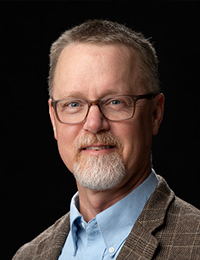
Dr. Paul Fricke was raised on his family's row crop and dairy farm located near Papillion, Nebraska where his father continues to farm today. Dr. Fricke joined the faculty at the University of Wisconsin-Madison in 1998. His current position is Professor of Dairy Science and Extension Specialist in Dairy Cattle Reproduction. Dr. Fricke’s research program focuses on understanding the biology underlying the many reproductive problems of dairy cattle. The goal of Dr. Fricke’s extension program is to improve reproductive efficiency of dairy cattle by applying scientific research to develop practical management strategies and assess new reproductive technologies.
•Belen Rabaglino (Utrecht University, The Netherlands)
“When bovine life begins in a petri dish: transcriptomic insights from embryos to calves conceived in vitro”
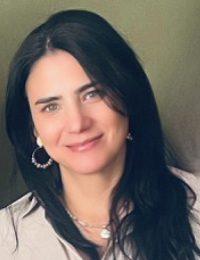
M. Belen Rabaglino, DVM, MSc, PhD is an Assistant Professor at the Department of Population Health Sciences, Faculty of Veterinary Medicine, Utrecht University. Her research focuses on harnessing molecular data science as a tool to understand the regulation of pregnancy establishment and healthy foetal development following the application of assisted reproductive technologies in cattle.
Plenary session: 16:30 – 18:30 (Tokachi Plaza)
Pierre Comizzoli, DVM, PhD, is a Senior Program Officer for Science at the Smithsonian Institution in Washington DC, USA. His research centers on reproduction, fertility preservation, assisted reproduction, and biobanking of a wide range of wild animal species in different countries.
•Katie Edwards (Chester Zoo, United Kingdom)
“Non-invasive biomarkers of reproduction in individuals and populations of wild vertebrates”
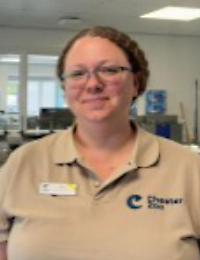
Katie Edwards, PhD, is a Lead Conservation Scientist at Chester Zoo, UK, and the current Chair of the International Society of Wildlife Endocrinology. Her research focuses on the use of physiological biomarkers to understand animal reproduction, health and wellbeing, providing evidence to support the conservation of wildlife species both ex situ and in situ.
•Alexandre Silva (Federal Rural University of Semi-Árid, Brazil)
“The role of emerging assisted reproductive technologies in the conservation of neotropical wild mammals – challenges, advances and perspectives”
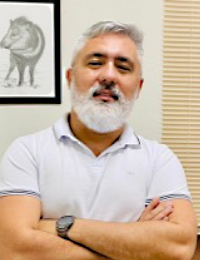
Alexandre Rodrigues Silva, DVM, PhD, is a Full Professor at the Center of Agricultural Sciences at the Federal University of Semiarid Region, Brazil. His research focuses on the reproductive physiology of wildlife and the development of assisted reproduction techniques applied to wildlife conservation, particularly the development of biobank protocols for gametes and gonadal tissues.
•Pei-Chih Lee (Smithsonian's National Zoo and Conservation Biology Institute, USA)
“Biobanking biodiversity: recent strategies, challenges, and opportunities”
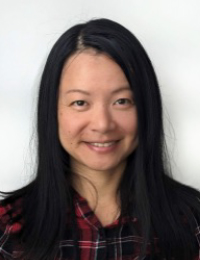
Pei-Chih Lee, MS, PhD, is a research biologist at the Center for Species Survival in Smithsonian's National Zoo and Conservation Biology Institute, USA. Her research seeks to develop and apply latest biotechnologies to reproductive studies and genome resource banking of rare and endangered species.
Closing Ceremony: 18:30 – 19:00 (Tokachi Plaza)